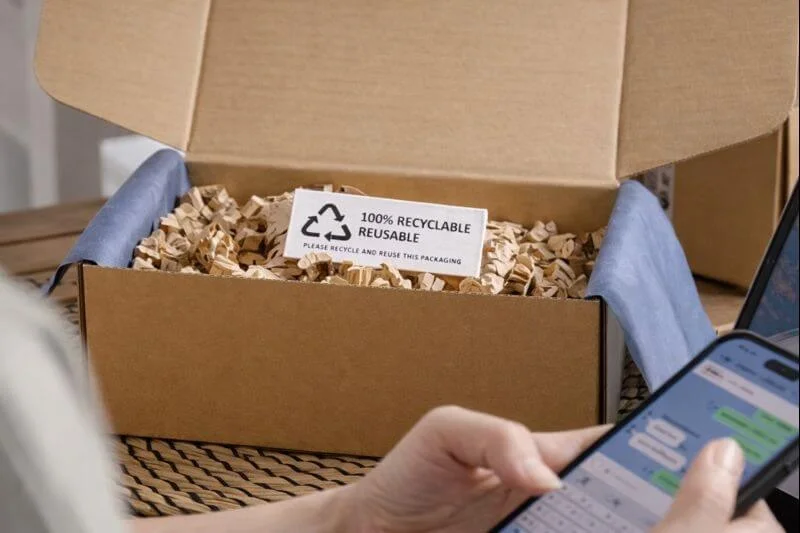
Smart Packaging Technology Hacks provides teams accurate information on products, lowers trash, and hastens work on both trucks and on the floor. Because many American companies have slim margins and steep shipping expenses, they include labels, chips, and sensors to safeguard products and reduce losses. Simple tools like QR codes, RFID, and NFC plus sensors and digital logs are used by smart packs to monitor condition, location, and authenticity.
Effective use of these instruments helps packaging teams to prevent spoilage, reduce returns, and go quicker. Packaging Company uses these ideas to cut costs and improve service for clients who ship perishable or high-value items.
10 Smart Packaging Technology Hacks to Save Money and Increase Efficiency
This guide lists ten Smart Packaging Technology Hacks you can apply now.
1. Add RFID for real-time inventory control

Use RFID tags to read many items at once and to find stock fast. You will scan pallets and cases without opening Custom Rigid Boxes, and you will cut time on manual counts. Teams report inventory accuracy jumps when they tag high-value items and add readers at doors and aisles. You will read hundreds of tags per second, which beats barcode scans one at a time.
Passive RFID tags cost only a few cents each in volume, and readers cost a few hundred to a few thousand dollars. Many operations see payback in under two years because they cut stockouts and lower labor for cycle counts. Packaging Company tested RFID on a pilot line and cut cycle-count time by more than half while raising accuracy above 95 percent.
Start by tagging pallets and cases, connect readers to your warehouse system, and expand to units that cause the most shrink. Track accuracy and labor hours to show clear savings.
- Typical ROI: Many stores note an increase in inventory accuracy from about 65% to more than 95% in six months.
- Scan speed: RFID reads hundreds of tags per second, whereas barcodes one-by-one.
- Cost: Readers cost $500–$2,500; passive RFID tags range $0.05–$0.30 each.
- Savings:
- Reduce stockouts by up to 30%.
- Cut labor for cycle counts by 60%.
- Implementation steps:
- Tag high-value SKUs first.
- Add readers at dock doors and key aisles.
- Integrate with WMS for alerts.
2. Use temperature sensors to protect cold-chain shipments
Place temperature sensors inside shipments to spot heat or freeze events that spoil goods. Teams that use these sensors cut cold-chain losses and insurance claims because they catch excursions early and let managers reroute or reject bad loads.
Packaging Company uses reusable sensors on high-value pharma lanes and single-use loggers for one-way food routes. Set alerts, log data centrally, and use the records to hold carriers to service levels and to improve routing.
- Failure cost: A single spoiled pallet can cost $2,000–$10,000 depending on product.
- Sensor cost: Single-use data loggers $5–$20; reusable IoT sensors $50–$200.
- Accuracy: Modern sensors report within ±0.5°C.
- Impact:
- Reduce cold-chain losses by up to 25%.
- Cut insurance claims and customer refunds.
- Deployment tips:
- Use single-use loggers for one-way shipments.
- Use reusable IoT sensors for high-value or frequent routes.
- Set automated alerts for excursions.
3. Print QR codes for traceability and customer links
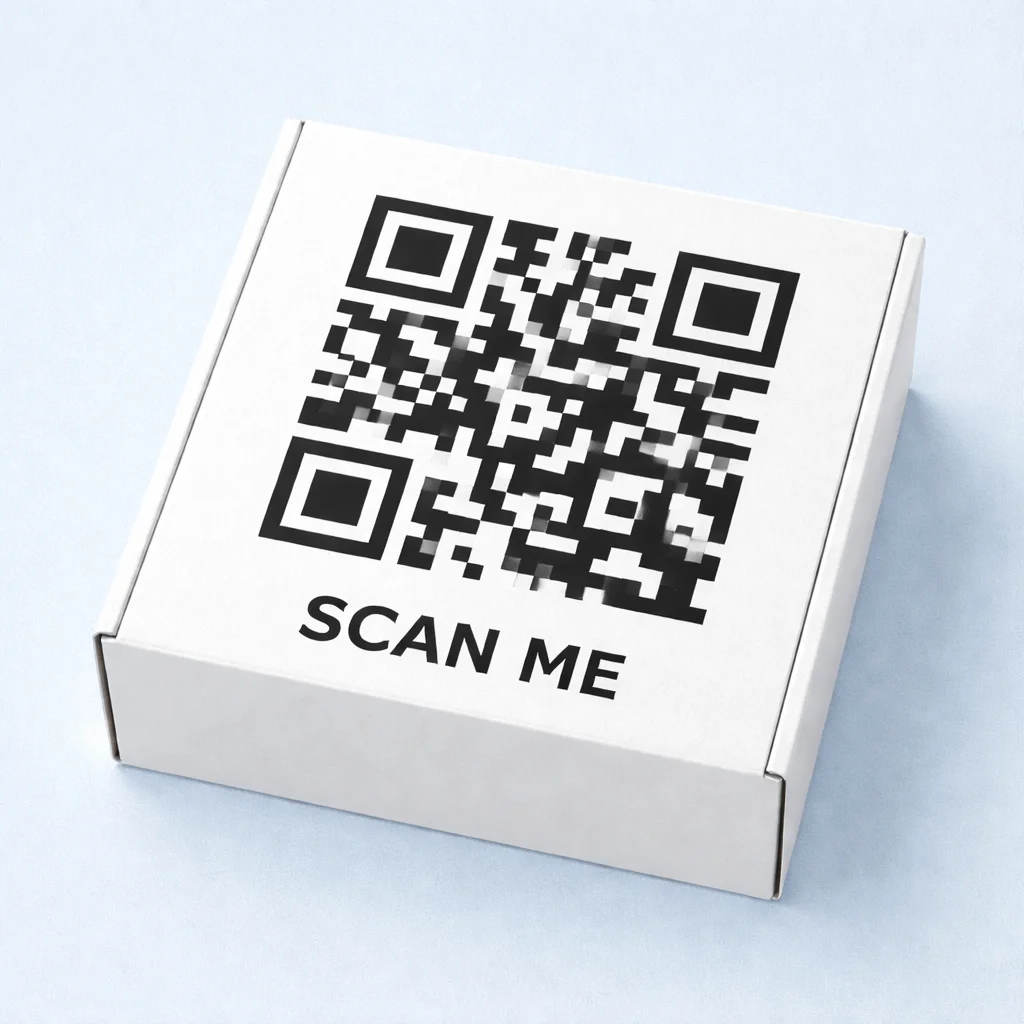
Add QR codes to packaging to link each unit to batch data, storage tips, and marketing pages. Teams use codes to narrow recalls to specific batches and to speed customer support. Scannable codes also boost direct engagement and let brands collect feedback at the moment of use.
Use codes on food labels to show origin and storage steps, on medicine packs to show safety leaflets, and on electronics for warranty registration. Track scans to see which markets interact most and to tune your messaging and supply choices. Use this one of the top Smart Packaging Technology Hacks to get the desired results.
- Cost: Printing QR codes adds $0.01–$0.05 per unit.
- Engagement: Scannable codes increase direct consumer interactions by 20–40%.
- Traceability:
- Link each code to batch, origin, and expiry.
- Reduce counterfeit risk and speed recalls.
- Benefits:
- Faster recalls: narrow affected units by up to 90%.
- Marketing lift: capture emails and feedback at point of use.
- Best uses:
- Food labels for origin and storage tips.
- Pharma for batch verification and safety leaflets.
- Electronics for warranty registration.
4. Add NFC for one-tap authentication and returns
Embed NFC tags so staff and customers tap a package to confirm authenticity or start a return. Most modern phones support NFC, and tags cost a few dimes each in volume. You can link a tap to a secure backend that verifies serial numbers and batch data. Luxury brands use NFC to stop counterfeits, and retailers use it to speed returns with self-serve instructions and labels.
NFC cuts fraud losses and lowers customer service calls because buyers can verify items themselves. Use NFC on premium SKUs and pair it with tamper evidence to show both authenticity and integrity. Train returns staff to use simple readers and log events to your system for audits. Measure fraud claims and call volume to show the value of the tap.
- Tag cost: NFC tags $0.10–$0.50 each in volume.
- Adoption: 80%+ of modern smartphones support NFC.
- Use cases:
- Verify luxury goods and prevent counterfeits.
- Trigger return authorization and instructions.
- Savings:
- Cut fraud-related losses by up to 15% in high-risk categories.
- Reduce customer service calls by 20% with self-serve returns.
- Implementation:
- Embed NFC in premium SKUs.
- Link to secure backend for validation.
- Train staff to use NFC readers at return desks.
5. Use active packaging to extend shelf life
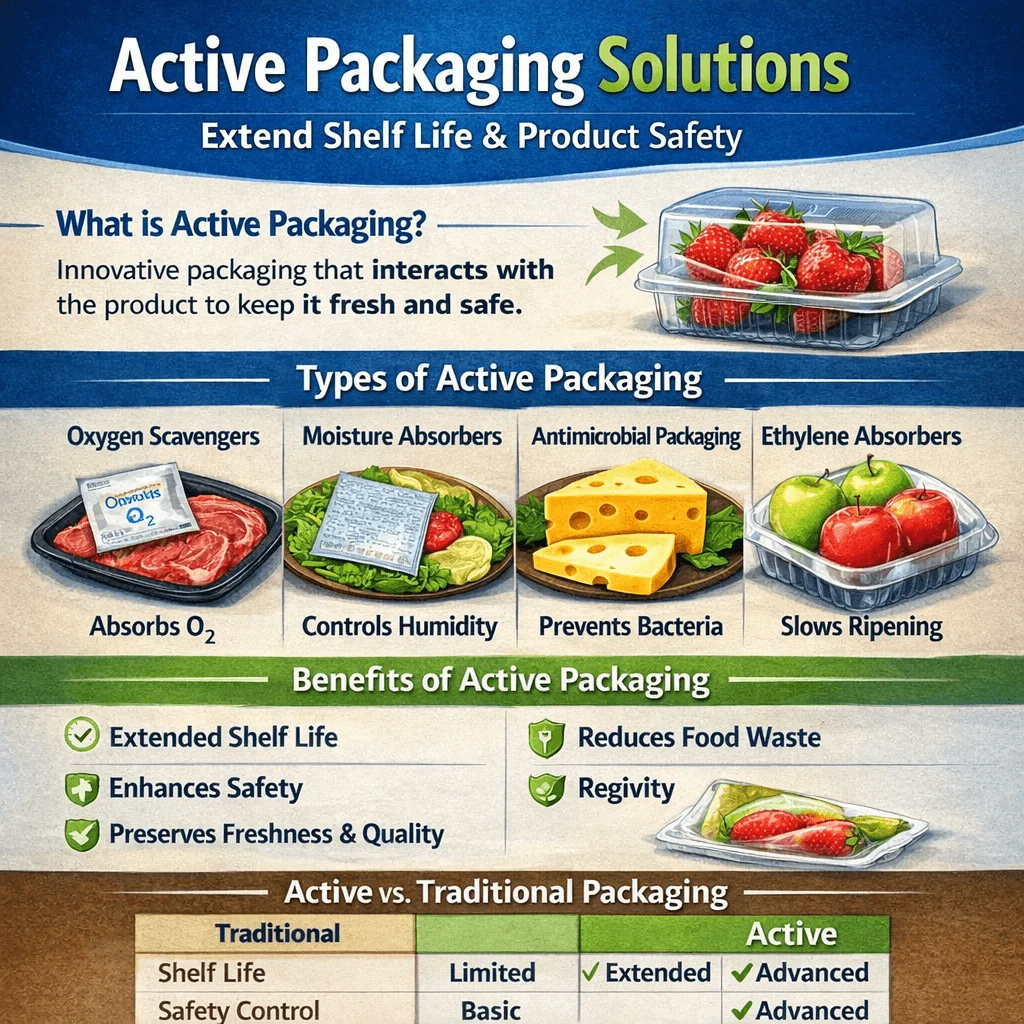
Choose active packaging components that interact with the goods to slow rotting including moisture absorbers and oxygen absorbers. Test target SKUs with high waste levels in one location to quantify benefits. Count the shelf life days gained and contrast returns and spoilage before and after.
Many teams discover that reducing waste across thousands of units results in great yearly savings from a low per-unit cost. Prove the benefits before you scale using store trials and lab tests. It is one of the best Smart Packaging Technology Hacks.
- Shelf-life gains: Active solutions can extend shelf life by 20–50% depending on product.
- Cost: Add-on materials cost $0.02–$0.50 per unit.
- Impact:
- Reduce waste and markdowns.
- Improve on-shelf availability.
- Numbers:
- Food waste costs U.S. businesses billions annually; even small shelf-life gains cut losses.
- A 10% reduction in spoilage can save thousands per SKU per year.
- Rollout tips:
- Start with high-waste SKUs.
- Test in one region before national rollout.
- Monitor returns and shelf performance.
6. Automate packing with automation and vision systems
Install automation cells that size, fill, and seal Custom Kraft Boxes with sensors and cameras to reduce errors and speed output. Smart lines run faster and more consistently than manual teams, and they reduce material waste by right-sizing boxes. Small automated cells cost tens of thousands of dollars, while full lines cost more, but you will cut packing labor by large percentages and increase throughput.
Use vision checks to catch defects and to verify labels and seals. Measure box fill rate, damage per thousand units, and units per hour to show gains. Packaging Company used a single automated cell to raise throughput and to lower freight spend by reducing empty space in shipments. Use data from the line to tune speeds and to reduce jams so you keep output steady.
- Labor savings: Automation can cut packing labor by 40–70%.
- Throughput: Smart lines process 2–5x more units per hour than manual lines.
- Equipment cost: Small automated cells $25k–$150k; full lines $250k+.
- Benefits:
- Reduce material waste by optimizing box sizes.
- Lower damage rates with consistent sealing.
- Key metrics:
- Right-sized packaging reduces freight costs by up to 15%.
- Faster lines reduce lead time and improve on-time delivery.
- Action plan:
- Start with a single cell for a high-volume SKU.
- Add vision checks to catch defects early.
- Use data to tune speeds and reduce jams.
7. Fit tamper-evident seals to protect integrity
Apply tamper-evident labels or smart seals that show if someone opened a Perfume Gift Packaging and that can log the event. These seals cost a few cents each for simple labels and more for smart versions that record events.
Log seal events to spot patterns of tampering and to act on risky routes or carriers. Use seal data in audits and in claims to speed resolution and to protect your brand.
- Seal cost: Tamper-evident labels $0.02–$0.10 each; smart seals higher.
- Security gains:
- Reduce theft and tampering claims.
- Improve consumer trust for high-value goods.
- Numbers:
- Tamper evidence can cut returns for suspicious damage by 10–30%.
- For pharma, tamper-proofing reduces regulatory risk and fines.
- Deployment tips:
- Use on high-value or regulated products.
- Combine with QR/NFC for verification.
- Log seal events in your system for audits.
8. Use data analytics to find waste and fix it fast
Analyze RFID, temperature sensors, returns, and packing lines' data to locate the main cost leaks. Run a 90-day audit; focus on the top ten SKUs by spending and waste; and test modifications with unambiguous measurement. Dashboards help to demonstrate victories and hold teams responsible.
When you spot a carrier with repeated temperature excursions or a SKU with high damage, act quickly to change carriers or to redesign the pack. Use simple charts to show leaders the wins so you can get a budget to scale.
- Typical gains: Analytics projects often cut packaging spend 5–15% in year one.
- Data sources: WMS, sensors, returns, carrier performance.
- Key KPIs:
- Damage rate per 1,000 units.
- Average box fill rate.
- Cost per shipped unit.
- Actionable steps:
- Run a 90-day data audit.
- Target top 10 SKUs by spend and waste.
- Test changes and measure lift.
- Example numbers:
- Improving box fill from 60% to 75% can cut freight spend by ~10%.
- Reducing damage by 20% lowers replacement costs and customer churn.
9. Move to recyclable materials and lighter designs
Redesign packages to help you reduce weight and employ reusable materials lowering material and shipping costs. Lighter Custom Cardboard Boxes save fuel and lower freight weight; many companies double-digit percentages double-double their packaging weight via intelligent makeover. Although some sustainable materials are more expensive per unit, you will typically cut on shipping and boost brand image.
Measure influence using weight per unit, freight cost per kilo, and percent recyclable content. Measure damage and customer feedback on top-selling SKUs; communicate the change to customers so they appreciate the sustainability move and so you save perplexity at returns. Pilot modifications on top-selling SKUs. Show recyclability using legible labels to assist people in proper trash sorting.
- Material savings: Lighter boxes reduce freight weight and fuel costs.
- Recycling impact:
- Many brands cut packaging weight by 10–30% with redesigns.
- Recyclable materials improve brand image and compliance.
- Cost trade-offs:
- Some sustainable materials cost 5–20% more per unit but save on transport.
- Numbers to track:
- Weight per unit (grams).
- Freight cost per kg.
- Percentage of recyclable content.
- Rollout plan:
- Pilot with top-selling SKUs.
- Measure freight and damage before and after.
- Communicate sustainability to customers.
10. Link records with blockchain for secure traceability
You can link QR codes or NFC taps to blockchain records so a scan shows an immutable history. Teams that use this approach narrow recall scope and speed response because they can find affected lots quickly.
Many pilots run on permissioned chains to keep costs down and to control access. Start with one product line, onboard key suppliers, and measure recall time and scope to show value. Use the ledger to prove origin and to win trust from buyers and regulators.
- Use cases:
- Food origin tracking.
- Pharma batch verification.
- Luxury goods provenance.
- Benefits:
- Speed recalls and narrow affected lots.
- Build consumer trust with verifiable origin.
- Costs:
- Integration and transaction fees vary; many pilots run on permissioned chains to cut costs.
- Impact numbers:
- Faster recalls can reduce recall scope by up to 80%.
- Traceability reduces counterfeit risk and protects brand value.
- Implementation:
- Start with one product line.
- Link QR/NFC to blockchain records.
- Share access with suppliers and regulators.
Key Smart Packaging Technology Options
|
Technology |
Typical Unit Cost |
Primary Benefit |
Best First Use |
|---|---|---|---|
|
RFID |
$0.05–$2.50 |
Fast inventory reads; shrink reduction |
Pallets & cases |
|
QR codes |
$0.01–$0.05 |
Traceability; consumer engagement |
Food & FMCG |
|
NFC |
$0.10–$0.50 |
One-tap authentication |
Luxury & returns |
|
temperature sensors |
$5–$200 |
Cold-chain monitoring |
Pharma & perishables |
|
active packaging |
$0.02–$0.50 |
Extend shelf life |
High-waste SKUs |
|
blockchain |
Variable |
Immutable traceability |
Food & pharma |
Start saving with Smart Packaging Technology today
Choose one SKU. It should have the high trash and conduct a 90-day pilot employing RFID, temperature sensors, or QR codes. Before and afterward, record damages, labor, and transportation costs. Use the findings to clearly demonstrate savings to leadership and to scale. Designing the pilot, selecting the appropriate technology, and gauging outcomes so you may experience quick successes. Smart Packaging Technology Hacks are used by the Packaging Company to hire our experts now.
FAQs
What is smart packaging and how does it work?
It adds tags, chips, or sensors to packs so they can report condition, location, or authenticity. The pack links to cloud systems that store data and send alerts. Brands use these tools to protect goods, speed recalls, and give customers useful info.
What technologies make smart packaging?
The main tools include:
- RFID
- QR codes
- NFC
- Sensors
- Active packaging
- Blockchain
- Automation
How much does smart packaging cost per unit?
Costs vary by tech and volume. Typical ranges include:
- RFID: $0.05–$2.50 per tag.
- QR codes: $0.01–$0.05 per print.
- NFC: $0.10–$0.50 per tag.
- temperature sensors: $5–$200 per device.
- active packaging: $0.02–$0.50 per unit.