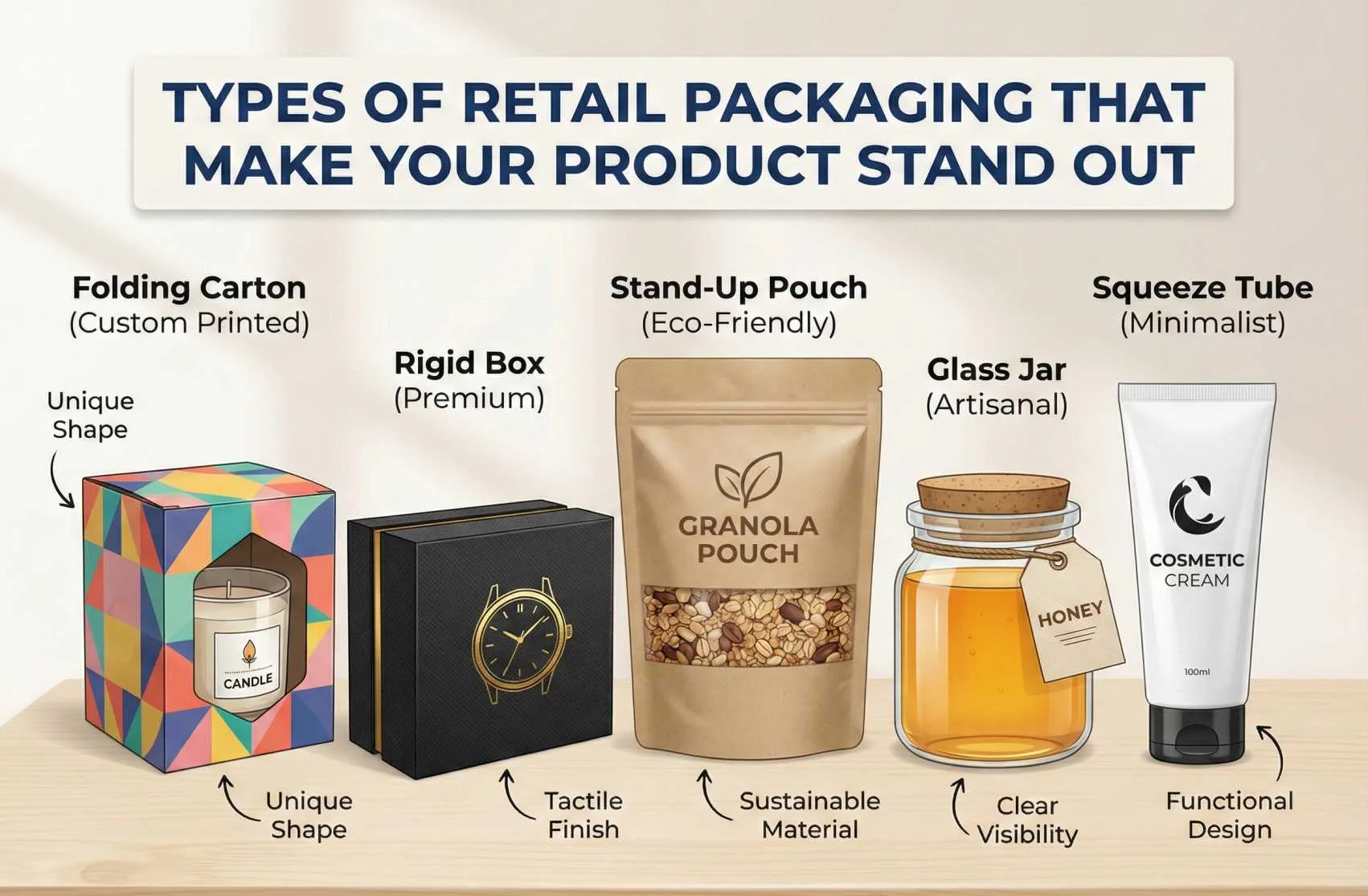
Retail buyers pick with their eyes first, and Types of Retail Packaging set that first look. In the U.S., flexible packaging generated sales of $41 billion recently. And it is growing rapidly. Overall, the overall packaging market was approximately $180 billion.
The U.S. packaging industry undergoes constant change to meet customer needs and shipping requirements and supports hundreds of thousands of jobs. Thus, picking the right custom packaging is beneficial for you.
12 Types of Retail Packaging That Leave a Lasting Impression
1. Folding Cartons
A light paperboard that is delivered flat and turns into a box at the packing line is folded to form cartons. Because printers generate vivid colors and clear images on the surface, brands select this style for food, cosmetics, and tiny electronics. For store workers, folding cartons make shelf stacking simple; for high-volume runs and rapid assembly they are ideal.
Pros:
- Cost-effective for large production runs
- High-quality printing for strong brand visuals
- Ships flat to save warehouse space
Cons:
- Not ideal for heavy or very fragile items
- Less durable in wet shipping conditions
- May not feel premium for high-end products
2. Rigid Set-Up Boxes
Custom Printed Rigid Boxes look heavy and valuable when shoppers touch them. Brands use this style for jewelry, luxury cosmetics, and gift items that need a strong first impression. These boxes hold inserts, foam, or velvet linings and create an “unpack” moment that customers remember when opening the box at home.
Pros:
- Strong premium feel that boosts perceived value
- Protects fragile items during handling
- Often reusable by customers for storage or gifting
Cons:
- Higher cost per unit than paperboard boxes
- Adds weight and shipping cost for each unit
- Harder to make in huge quantities without higher budgets
3. Corrugated Boxes
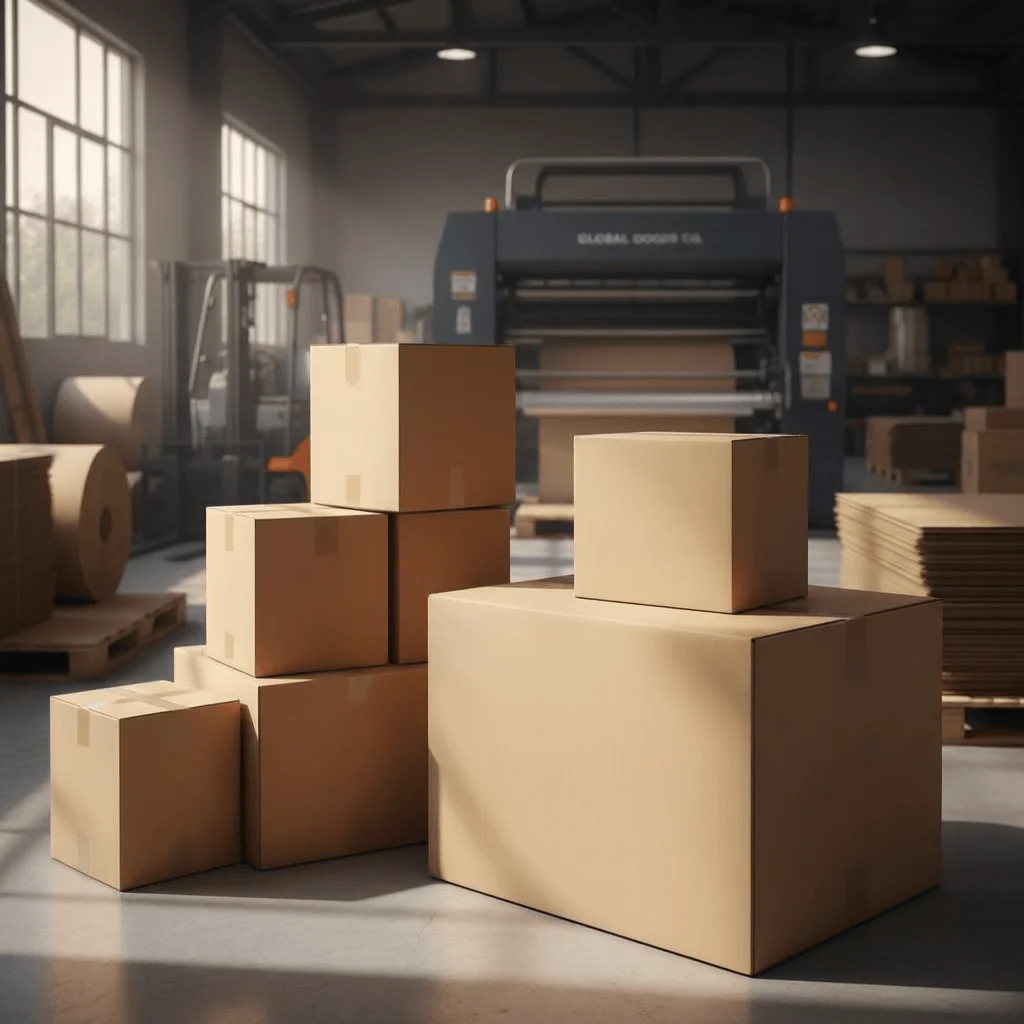
Custom Corrugated Boxes Wholesale use a fluted layer that absorbs shocks and protects contents during long shipping routes. Retailers and online sellers pick corrugated for bulk items, multipacks, and items that move through many hands before reaching shelves. This type also suits custom printing for brand messaging on the outside.
Pros:
- Excellent protection for rough transit and heavy items
- Flexible sizes that fit many product types
- Often recyclable and cost-friendly for larger sizes
Cons:
- Looks less refined on shelf without extra finishing touches
- Takes extra space when assembled and stored
- Printing quality stays lower unless adding sleeves or wraps
4. Clamshells and Blister Packs
Clamshells and blister packs show the product using transparent plastic while keeping it steady and safe. Many little tools, gadgets, and toys utilize this style to let customers view the real object before they buy. These packets are hung on pegs in stores, which encourages spontaneous purchases and tidy arrangements.
Pros:
- Lets shoppers view the product directly
- Works well for pegboard displays and hanging racks
- Keeps the product fixed and tamper-resistant when sealed
Cons:
- Feels less eco-friendly because of plastic use
- Can frustrate buyers due to hard-to-open seals
- Limits space for bold graphics unless paired with backing cards
5. Windowed Boxes
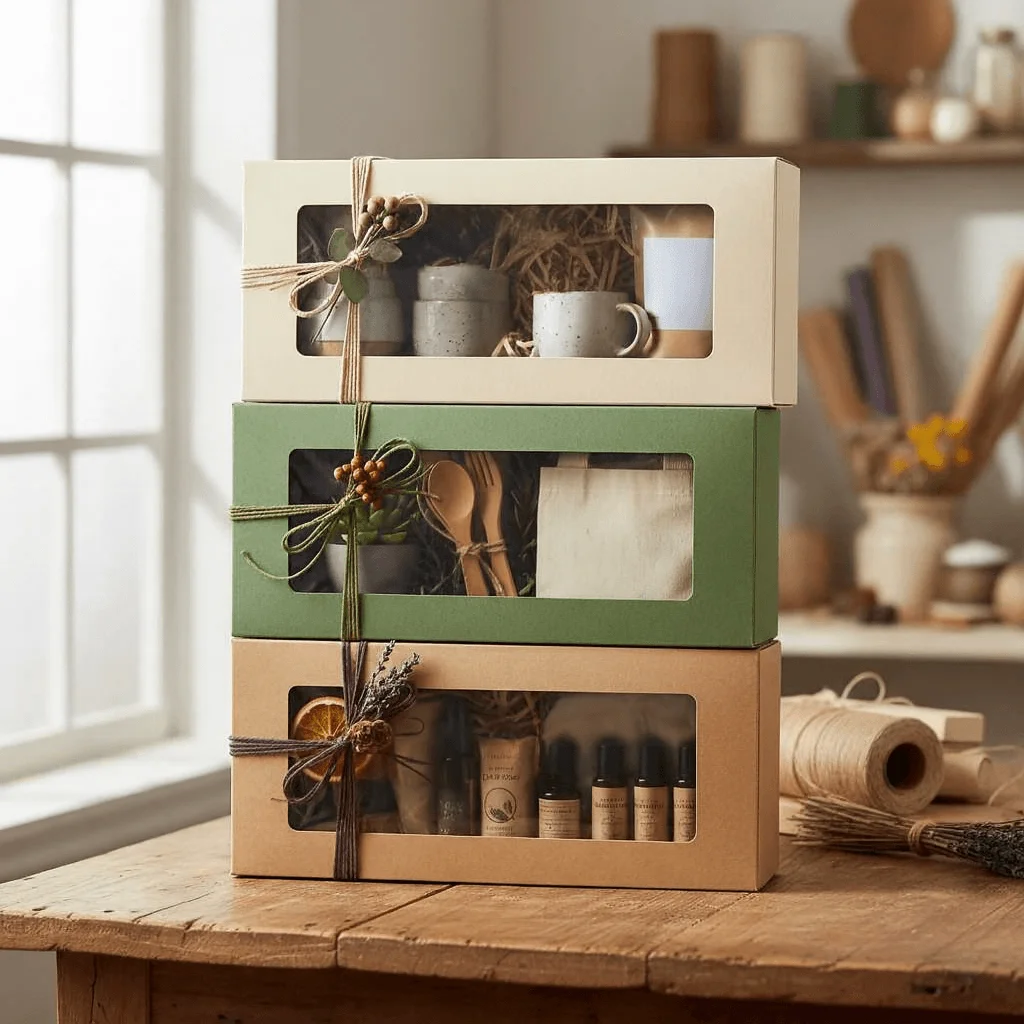
Windowed boxes mix a solid carton with a small clear window so buyers can check color, texture, or size without opening the pack. This style suits baked goods, toys, and apparel accessories that benefit from a peek. The window builds trust while Custom Gift Window Boxes protect the item inside.
Pros:
- Lets shoppers inspect product parts without opening
- Costs less than full plastic visibility packs
- Keeps room for strong brand graphics and text
Cons:
- Window materials can complicate recycling in some areas
- Adds die-cutting steps that raise tooling costs
- May expose sensitive items to light or dust over time
6. Poly Bags and Pouches
Snacks, single-use items, and soft items requiring light, flexible wrapping fit poly bags and pouches. Resealable zippers bring freshness to personal care and food products; clear fronts showcase product texture or color. Online orders benefit much from these packs since they are light and take up little room.
Pros:
- Light and inexpensive to ship
- Resealable options support freshness and reuse
- Fits odd shapes and flexible items with little waste
Cons:
- Feels less premium for upscale brands
- Offers limited space for larger graphics or long text
- Recyclability depends on local collection rules
7. Tubes and Cylindrical Packaging
Tubes and round cans stand out by offering a strong tactile sensation and altering the conventional box shape. To give their goods a boutique appeal, brands package teas, nibbles, candles, and specialty cosmetics in tubes. Because consumers regularly reuse these containers at home for display or storage, brand visibility goes beyond the store.
Pros:
- Unique shape that stands out on crowded shelves
- Easy to stack vertically or group for display
- Often reusable by customers for home storage
Cons:
- Costs more than simple cartons to produce
- Provides less space for long copy or large images
- May add freight complexity and higher shipping costs
8. Sliding Drawer Boxes
Custom Sliding Drawer Boxes create a reveal moment when the inner tray slides out from a sleeve. It suits gift sets, beauty collections, and tech accessories that need inner compartments. After buying a product, customers love taking pictures of the unboxing process because it feels premium.
Pros:
- Offers a memorable and tactile unboxing experience
- Holds multiple parts securely in inner compartments
- Works well for gifting and premium product lines
Cons:
- Adds design and assembly costs compared to simple boxes
- Increases package size and shipping weight
- Mixed materials or coatings can complicate recycling
9. Windowed Sleeves and Wraps
Windowed sleeves and wraps slide over a primary pack to add design, a product window, or promo messaging without changing the inner package. Retailers use sleeves to mark limited editions, seasonal runs, or special offers while keeping stock management simple. Sleeves also fit stores that need fast merchandising swaps.
Pros:
- Low-cost way to refresh or brand existing packaging
- Easy to apply or remove during display updates
- Good for short runs and seasonal promotions
Cons:
- Adds a material layer that some shoppers may toss
- May slip or tear if not matched to the pack shape
- Gives little structural protection for fragile items
10. Display Trays and Point-of-Sale Boxes
To encourage impulse purchases, point-of-sale boxes and display trays are placed at the ends of aisles or close to check-out counters. Retail personnel position these displays in hot areas to promote highlighted SKUs. Many units may be found on these trays, which have vivid graphics to create a brief product narrative in which customers wait to pay.
Pros:
- Boosts impulse sales and brand visibility at the point of purchase
- Easy for staff to restock and manage on the shop floor
- Lets a single display carry multiple SKUs or sampler packs
Cons:
- Short-term use that must match store placement rules
- Must keep a balance between cost and strength to avoid damage
- Some stores require approval to place displays in certain areas
11. Paper Bags with Handles
For fashion, gourmet food, and boutique purchases, paper bags with handles provide a clean and organic vibe. People who buy these bags bring them home and use them as free advertising in public. The stuff lets you print a basic design that complements the store's mood or display a brand logo in several forms.
Pros:
- Boosts brand visibility outside the store as customers walk around
- Often reusable and recyclable in many areas
- Feels more substantial than thin plastic carry bags
Cons:
- Gives limited protection for fragile items unless padded inside
- Can tear if overloaded or get wet without coating
- Requires extra lining for weather resistance in some climates
12. Eco-Friendly and Compostable Packs

To minimize waste and convey an environmental message, eco-friendly Custom Retail Display Boxes feature mono-material choices, compostable films, or recycled paperboard. Since many consumers search for greener packs when making purchases, this choice matches companies aiming at Conscious customers. To help consumers know how to recycle or compost the packaging, ensure it has basic disposal instructions.
Pros:
- Attracts shoppers who care about the environment and sustainability
- Often lowers total material use compared to over-packaging
- Supports a brand story that centers on responsibility and values
Cons:
- Sometimes costs more per unit than standard materials
- Requires simple disposal instructions to work well for buyers
- Local recycling and compost rules vary and may limit options
Table Showing Types of Retail Packaging with Pros & Cons
|
Packaging Type |
Use / Products |
Pros |
Cons |
|---|---|---|---|
|
Folding Cartons |
Small food, cosmetics, electronics |
Cheap, prints well, ships flat |
Not strong, not waterproof, feels basic |
|
Rigid Boxes |
Jewelry, luxury gifts |
Feels fancy, protects items, reusable |
Expensive, heavy, hard to make in bulk |
|
Corrugated Boxes |
Bulk items, shipping |
Strong, fits many sizes, recyclable |
Looks plain, bulky, low print quality |
|
Clamshells / Blister Packs |
Small toys, gadgets |
See product, hangs on peg, secure |
Plastic, hard to open, less space for design |
|
Windowed Boxes |
Toys, baked goods, accessories |
See product, cheaper than full plastic, room for design |
Harder to recycle, extra cutting cost, can let dust/light in |
|
Poly Bags / Pouches |
Snacks, soft items |
Light, resealable, fits odd shapes |
Feels cheap, small design space, recycling tricky |
|
Tubes / Cylinders |
Teas, candles, cosmetics |
Unique shape, stackable, reusable |
Costly, small space for design, shipping tricky |
|
Sliding Drawer Boxes |
Gifts, beauty, tech |
Fun unboxing, holds many parts, fancy feel |
Costly, heavier, recycling harder |
|
Windowed Sleeves / Wraps |
Seasonal, special editions |
Cheap branding, easy to change, short runs |
Adds material, can tear, weak protection |
|
Display Trays / POS Boxes |
Checkout or impulse items |
Boosts sales, easy refill, shows many products |
Short-term use, need strong design, store approval |
|
Paper Bags with Handles |
Fashion, food, boutique items |
Brand visibility, reusable, feels nice |
Weak protection, can tear/wet, may need lining |
|
Eco-Friendly Packs |
Sustainable products |
Attracts eco shoppers, saves material, eco image |
Costly, needs instructions, local recycling rules vary |

Pick Types of Retail Packaging from Shelf Appeal to Customer Retention
Choose the best Types of Retail Packaging to boost shelf appeal, cut returns, and win customer loyalty. Start with one test SKU, track sales and damage, and use shopper feedback to refine the pack until it drives stronger results. Upgrade to smarter Types of Retail Packaging offered by the Packaging Company to cut returns and improve brand perception now.
FAQs
How to choose the best type of retail packaging for a product?
Fit the pack to the weight, fragility, and product size. Consider store display requirements, delivery, and consumer pack opening mechanism. Little trials with actual consumers assist choose the ideal match before a complete rollout.
- Measure product size and weight for fit and support
- Review shipping risks and drop protection needs
- Pick a pack that matches the brand’s price point
- Confirm store display rules and shelf space needs
- Check materials for sustainability and local recycling
- Estimate total cost per unit including shipping
- Test a sample batch with target shoppers for feedback
What simple eco-friendly choices work for retail packaging?
To lower waste, choose compostable pouches, mono-material films, recycled paperboard, and little fillers. Select water-based inks and, wherever feasible, eschews mixed materials. Label the pack with brief disposal instructions so consumers know how to throw it.
- Recycled cardboard and kraft paper materials
- Mono-polymer pouches for easier recycling
- Compostable plant-based films for specific product types
- Water-based inks and low-solvent coatings
- Minimal inserts and void fill to cut material use
- Refillable containers for repeat buyers
- Paper-based windows instead of plastic when possible
Which printing tricks make packaging stand out on shelves?
Stop consumers' eyes with brilliant colours, large logos, and brief headlines. To ensure the message lands rapidly and forcibly, maintain text brief and legible from a distance.
- Full-color digital or offset printing for vivid images
- Spot UV gloss to highlight key graphics
- Foil stamping for a premium accent on logos
- Embossing or debossing to add a tactile element
- Soft-touch or matte lamination for a luxe feel
- Metallic or special effect inks for standout visuals
- Short readable headlines and strong branding marks